
Intra-Company Transfers (ICT) to Canada: A 2026 Legal Overview for Multinational Corporations

For international corporations considering expansion into the North American market, Canada remains a significant jurisdiction for growth. However, the regulatory framework governing corporate immigration has evolved. The “Intra-Company Transfer” (ICT) program involves specific eligibility criteria that are rigorously adjudicated by Immigration, Refugees and Citizenship Canada (IRCC). At Ahlawat Law Professional Corporation, we provide legal counsel to corporate executives and general counsel regarding Canadian immigration compliance. This article outlines the current legal standards for the ICT program as of January 2026, the specific eligibility tests, and the regulatory requirements that multinational entities must meet. What is the Intra-Company Transfer (ICT)? The Intra-Company Transfer is a federal immigration stream under the International Mobility Program (IMP). It is designed to facilitate the temporary transfer of qualified personnel from a foreign company to its related Canadian entity. The legal basis for this program is Regulation 205(a) of the Immigration and Refugee Protection Regulations (IRPR). This regulation permits officers to grant work permits without a Labour Market Impact Assessment (LMIA) where it is demonstrated that the transfer will provide a “significant economic, social, or cultural benefit” to Canada [1]. Eligibility Criteria: The Two-Part Assessment Eligibility is determined by an assessment of both the corporate structure and the individual nominee. 1. The Corporate Test: “Qualifying Relationship” A “qualifying relationship” must exist between the foreign enterprise and the Canadian enterprise. This relationship must be established at the time of the application and persist throughout the duration of the transfer. Before this can be tested the Company must demonstrate to be a Multi National Corporation i.e. it should have active operations in at-least two other countries. Simply incorporating in another jurisdiction doesn’t help, but there should be an organic, actively running business outside the home country before applying for ICT to Canada for establishing and running a Canadian Entity. Recognized corporate structures include: Requirement for Active Operations: Both the foreign and Canadian entities must be “doing business.” This is defined legally as the regular, systematic, and continuous provision of goods or services. The mere presence of an agent or office in Canada is generally insufficient [2]. 2. The Employee Test: Function & Tenure The individual being transferred must generally: Category Description Executive Directs the management of the organization or a major component; establishes goals and policies; exercises wide latitude in decision-making. Senior Manager Manages the organization, a department, subdivision, or function; supervises and controls the work of other managers or supervisors. Specialized Knowledge Possesses both “proprietary knowledge” and “advanced expertise” regarding the company’s product, service, research, equipment, techniques, or management. The Application Process The procedural requirements generally involve the following stages: Phase 1: Corporate Establishment Before an immigration application is filed, the Canadian entity typically must be legally established. This includes incorporation (Federal or Provincial), obtaining a Business Number (BN) from the Canada Revenue Agency, and securing physical commercial premises. Phase 2: Employer Compliance The Canadian entity must submit an Offer of Employment via the IRCC Employer Portal and pay the Employer Compliance Fee. This submission details the business activities, job duties, and wage compliance. Phase 3: Work Permit Application The foreign national applies for the work permit (typically form IMM 1295). The applicant bears the burden of proof to demonstrate the qualifying relationship, their tenure, and the economic benefit of their transfer. Regulatory Considerations for 2026 Policy guidelines and enforcement priorities change. Applicants and employers should be aware of the following: How We Assist Navigating cross-border business expansion requires adherence to strict legal protocols. Ahlawat Law Professional Corporation assists multinational clients by: Contact us to schedule a consultation regarding your business immigration needs. Endnotes & Official Sources: [1] Intra-company transferees [R205(a)] – General Overview: [2] Qualifying Relationship & Business Activity: [3] Specialized Knowledge Defined: Disclaimer: The information provided in this article is for general informational purposes only and does not constitute legal advice. Immigration laws and policies are subject to change. Readers should consult with a qualified lawyer for advice specific to their situation.

What to expect when coming to Canada for Short-Term Education in 2025

Are you planning to visit Canada for a short-term educational course in 2025? Here’s what you need to know, brought to you by Ahlawat Law PC, an Ontario law firm. What Qualifies as a Short-Term Course? What to Expect What You Should Be Aware Of What It Is Not Tip: Always check the latest requirements on the official Government of Canada website or consult with a licensed immigration lawyer or a RCIC for your specific situation. This post is for informational purposes only and does not constitute legal advice. For tailored guidance, contact Ahlawat Law PC.

The image depicts a warm and welcoming family reunion in Canada, with parents and grandparents visiting.

Welcoming your loved ones to Canada via Super Visa

At Ahlawat Law PC, we understand the deep desire to have your parents and grandparents join you in Canada for extended visits. The Super Visa is a fantastic program designed to make this a reality, allowing eligible parents and grandparents of Canadian citizens and permanent residents to visit Canada for up to five years at a time. It’s a visa that provides multiple entries and can be valid for up to 10 years. This blog post will delve into the key aspects of the Super Visa, helping you understand the eligibility requirements and the application process. What is the Super Visa? The Parent and Grandparent Super Visa is a special type of visitor visa that allows parents and grandparents to stay in Canada for a longer duration than a regular visitor visa. Instead of the usual six-month limit for most visitor visas, the Super Visa grants an initial stay of up to five years. This provides a wonderful opportunity for families to spend significant time together right here in Canada. Who is Eligible for a Super Visa? To be eligible for a Super Visa, both the applicant (the parent or grandparent) and the host (their child or grandchild in Canada) must meet certain criteria. Eligibility of the Applicant (Parent or Grandparent): Eligibility of the Host (Child or Grandchild in Canada): The Application Process: A General Overview The application process for a Super Visa generally involves these steps: Why Choose the Super Visa? The Super Visa offers significant advantages for Canadian families: Ahlawat Law PC: Your Trusted Partner in Family Reunification Navigating the intricacies of the Super Visa application can be challenging. At Ahlawat Law PC, our team is dedicated to providing you with the expert legal advice and support you need to successfully reunite with your parents and grandparents in Canada. We can assist you with: We deeply value the importance of family unity and are committed to guiding you through every step of the Super Visa process. Contact Ahlawat Law PC today for a consultation.

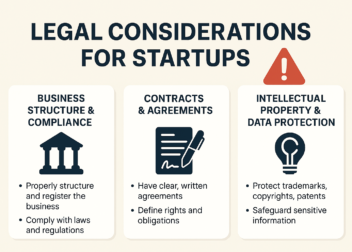
The Legal Foundations Every Startup Must Prioritize

Entrepreneurs often focus on innovation, market strategy, and securing investment when launching a startup. However, overlooking legal structuring can create significant vulnerabilities, which may only become apparent during disputes, due diligence, or intellectual property violations. At Ahlawat Law PC, we understand that legal considerations may seem like an additional expense, but they function as a critical safeguard—similar to insurance. Without proper legal structuring and documentation, startups expose themselves to risks that can threaten their long-term viability. Below, we outline three fundamental legal areas that every startup should prioritize. 1. Business Structure and Regulatory Compliance Selecting the appropriate business structure is essential, as it affects liability, taxation, and access to funding. Entrepreneurs must carefully evaluate whether a sole proprietorship, partnership, or corporation best aligns with their business goals. 📌 Key Considerations: 2. Contracts and Legal Agreements Clear, well-drafted contracts serve as the foundation of any business relationship. Many startups rely on verbal agreements, which can lead to misunderstandings, disputes, or financial loss. Legal documentation is essential to define expectations, allocate risk, and provide remedies in case of non-compliance. 📌 Essential Agreements for Startups: 3. Intellectual Property Protection and Data Privacy Compliance A startup’s intellectual property and data assets are often its most valuable resources. Without adequate legal protections, businesses risk losing control over their brand, innovations, and proprietary technology. 📌 Best Practices for IP and Data Protection: Legal Costs: A Strategic Investment, Not an Expense Startups frequently view legal fees as a cost center rather than a business safeguard. However, failing to address legal risks early can result in costly litigation, lost investment opportunities, and regulatory penalties. Investing in legal protections from the outset ensures operational stability and long-term success. Conclusion A startup’s legal foundation is just as critical as its business model. Entrepreneurs who take a proactive approach to structuring, contracts, and intellectual property protection will be better positioned to scale their businesses while mitigating risks. At Ahlawat Law PC, we assist startups in navigating legal complexities with tailored legal strategies. For guidance on structuring your business or drafting essential agreements, please contact us today. Disclaimer: This article is for informational purposes only and does not constitute legal advice. For personalized legal counsel, consult a qualified lawyer. #OntarioLaw #StartupLegalProtection #BusinessLaw #CorporateLaw #IntellectualProperty #PrivacyLaw #LegalCompliance