

What Should Be Included in a Unanimous Shareholders’ Agreement in Ontario?

If two or more people own a corporation together, a Unanimous Shareholders’ Agreement—often called a USA—is one of the most important documents to put in place early. A USA sets out the rules between the shareholders. It can deal with decision-making, share transfers, dispute resolution, exits, and what happens if one shareholder dies, becomes disabled, divorces, or simply wants out. For many business owners, the real question is not whether a USA is useful. It is: what should it actually include? The short answer is that there is no one-size-fits-all checklist. However, in Ontario, there are certain features that a USA should include if it is going to properly protect the business and the people involved. What Is a Unanimous Shareholders’ Agreement? A Unanimous Shareholders’ Agreement is a written agreement among all shareholders of a corporation. In Ontario, it can do more than a regular shareholders’ agreement. It can also restrict some or all of the powers that would otherwise belong to the directors. In practical terms, that means a USA can shift certain decision-making powers from the board to the shareholders themselves. For closely held corporations, family businesses, and founder-owned companies, that can be very useful. It allows the owners to agree in advance on how important decisions will be made and how difficult situations will be handled. What Must Be Included for It to Be a True USA? At a minimum, a proper USA should: If those elements are missing, the agreement may still operate as a contract between some or all shareholders, but it may not qualify as a true unanimous shareholders’ agreement. That legal distinction matters because a valid USA can affect how the corporation is managed and who has authority to make decisions. What Should Be Included in a Well-Drafted USA? Even if the minimum legal requirements are met, a basic agreement may still leave major gaps. A strong USA should usually address the following areas. 1. The Parties and the Corporation The agreement should clearly identify: This sounds simple, but accuracy matters. If ownership is not described properly, disputes can arise later over voting rights, control, and entitlements. 2. How the Business Will Be Managed A USA should explain how decisions will be made. This section often deals with: This is especially important where the shareholders want to keep direct control over major business decisions rather than leaving them entirely to the board. 3. Important Decisions That Need Special Approval Not every decision should be made by a simple majority. A good USA should list the major decisions that require: These decisions often include: This type of clause helps protect minority shareholders and reduces the risk of one group making major changes without broad agreement. 4. Rules About Selling or Transferring Shares One of the most important parts of any USA is the section on share transfers. Without clear restrictions, a shareholder may try to sell shares to an outside party, transfer shares to a spouse or family member, or otherwise change the ownership structure in a way the other owners never intended. A USA should usually address: For private corporations, transfer restrictions are often essential. 5. What Happens if a Shareholder Wants to Leave A good USA should plan for exits before there is tension. This part of the agreement may deal with: Some agreements include a shotgun clause or other buy-sell mechanism. Others set out a step-by-step process for offering shares to the remaining owners first. The right structure depends on the size of the business, the bargaining power of the shareholders, and whether all owners are active in the company. 6. How the Shares Will Be Valued A buyout clause is only useful if the agreement also explains how the shares will be priced. A USA should clearly say whether value will be determined by: Unclear valuation clauses are a common source of shareholder disputes. The more precise the agreement, the better. 7. Death, Disability, Incapacity, or Bankruptcy A USA should address what happens if a shareholder: This is one of the most important practical sections in the agreement. Without a clear plan, the remaining shareholders may find themselves in business with an estate trustee, a family member, or another unexpected party. A properly drafted USA can set out whether the shares must be sold, who can buy them, and how payment will be made. 8. Divorce and Family Law Issues In owner-managed and family-run corporations, marital breakdown can create serious business complications. A USA often includes provisions intended to reduce that risk, such as: This does not eliminate all family law issues, but it can help protect the corporation from unwanted disruption. 9. Future Funding and Capital Contributions Businesses often need more money over time. A USA should deal with what happens if the corporation needs additional funding. This section may address: This is particularly important in newer or growing businesses. 10. Confidentiality and Restrictive Covenants Where shareholders are actively involved in the business, the agreement may also include: These clauses are designed to protect the business if a shareholder leaves and later competes or attempts to take customers, staff, or confidential information. They must be drafted carefully. Restrictions that are too broad may be difficult to enforce. 11. Dispute Resolution and Deadlock Disagreements between shareholders are common. A USA should provide a path for resolving them. This may include: This is especially important where ownership is split 50/50. Without a clear process, the corporation can become paralysed when the shareholders disagree. 12. How New Shareholders Become Bound If a new shareholder joins later, that person should not be able to avoid the existing agreement. A USA should include a clause requiring any new shareholder to sign an agreement to be bound by it before receiving shares. This helps preserve consistency as the corporation grows or ownership changes. 13. What Happens if Someone Breaches the Agreement A USA should also say what happens if a shareholder breaks the rules. Possible consequences may include: This section gives the agreement practical force. Common Mistakes in Shareholders’ Agreements Some

Immigration Refusal in Canada: How Judicial Review Works

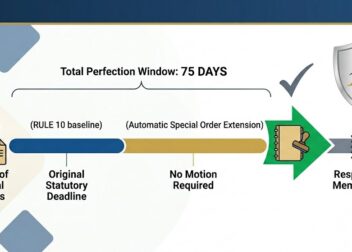
When an immigration application is refused, the next question is often whether that decision can be challenged in Federal Court. In many cases, the answer is yes—but the process is technical, deadline-driven, and often misunderstood. Ahlawat Law PC assists clients with applications for leave and judicial review in the Federal Court of Canada. One important procedural development in 2026 is the Federal Court’s current approach to the timeline for filing the Applicant’s Record, often referred to as the “75-day rule.” This article explains what the 75-day rule means, how the judicial review process works, and what applicants can generally expect. What Is Federal Court Judicial Review? Judicial review is the process by which the Federal Court examines whether an immigration decision was made lawfully, fairly, and reasonably. It is important to understand what judicial review is not: Instead, the Court reviews the decision-making process and the reasons given by the officer, tribunal, or decision-maker. The Court typically considers issues such as: In most immigration matters, the applicable standard of review is reasonableness. The First Thing to Know: There Are Two Separate Deadlines One of the most common sources of confusion is the assumption that there is only one Federal Court deadline. In reality, there are two different timelines. 1. Deadline to Start the Case This is the deadline to file the Notice of Application. Under section 72 of the Immigration and Refugee Protection Act, the time limit remains: These deadlines remain strict and are extremely important. 2. Deadline to File the Applicant’s Record Once the case has been started, the next major step is filing the Applicant’s Record. This is the package of materials that sets out the applicant’s case before the Court. This is where the current 75-day rule becomes relevant. What Is the “75-Day Rule”? Although the governing Rule refers to a 30-day period for filing the Applicant’s Record, the Federal Court’s current practice gives applicants an automatic additional 45 days in many immigration judicial review matters. As a practical matter, this means that the Applicant’s Record may often be filed within 75 days of receiving the written reasons for the decision. This extension generally applies automatically within that period. In most cases: provided the Applicant’s Record is filed within the permitted timeframe. When Does the 75-Day Period Begin? The timeline generally begins when the applicant receives the written reasons for the immigration decision. In some cases, the reasons are included with the refusal. In other cases, they are obtained through the Federal Court process after the case has already been commenced. Once those reasons are received, the timeline for filing the Applicant’s Record generally starts to run. What Is Included in the Applicant’s Record? The Applicant’s Record is one of the most important parts of the case. It typically includes: This is the stage at which the legal issues are framed in detail. It is also where the alleged errors in the immigration decision are set out clearly for the Court. What the Judicial Review Process Usually Looks Like For prospective clients, it is often helpful to understand the process in practical terms. Step 1: Filing the Notice of Application The process begins by filing a Notice of Application in Federal Court within the applicable deadline. This is the step that preserves the applicant’s right to challenge the decision. If this deadline is missed, the case may become significantly more difficult to pursue. Step 2: Obtaining the Reasons and Tribunal Materials If the decision-maker did not provide complete reasons at the outset, those reasons may be requested through the Court process. The written reasons are often central to the case because they show how the officer or tribunal reached the outcome. Step 3: Preparing the Applicant’s Record Once the reasons are available, the Applicant’s Record is prepared and filed. In many cases, the current practice allows up to 75 days from receipt of the reasons for this step. This is where the legal argument is developed and the case is presented in written form. Step 4: The Government’s Response After the applicant files the record, the Department of Justice, on behalf of the Minister, may file responding materials. Those materials generally explain why the decision should be upheld. Step 5: The Leave Stage Most immigration judicial review cases involve a leave stage first. This means the Court decides whether the case should proceed to a hearing. This decision is often made based on the written materials alone. Step 6: The Hearing If leave is granted, the Court schedules a judicial review hearing. The hearing is generally focused on legal argument. It is not a full re-hearing of the immigration application, and it does not operate like a trial. Step 7: The Court’s Decision After the hearing, the Court may either dismiss the application or allow it. If the application is allowed, the usual remedy is that the decision is set aside and sent back to a different officer or decision-maker for reconsideration. In most cases, the Court does not directly approve the immigration application itself. What Clients Should Expect Judicial Review Is About Legal Error The Court is not usually deciding whether the applicant “deserved” approval. The issue is whether the decision was made lawfully, reasonably, and fairly. The Written Materials Matter Federal Court immigration litigation is heavily document-based. The refusal letter, officer’s notes, written reasons, application history, and court filings often determine the strength of the case. Timing Is Critical Even though the 75-day rule provides more time to prepare the Applicant’s Record, the initial deadline to commence the case remains urgent. Success Usually Means Reconsideration A successful judicial review usually results in the matter being returned for a new decision. It does not usually mean the visa, permit, or immigration relief is automatically granted. Common Misunderstandings “The 75-day rule gives more time to decide whether to go to Court.” Not usually. The 75-day rule relates to filing the Applicant’s Record after the case has already been started. It does not extend the deadline to file the Notice of Application. “Judicial review is the same as an appeal.” It is not. Judicial review focuses on the legality and reasonableness of the decision, rather than simply whether the result should have

Instagram Account Disabled? How Legal Demand Letters Can Overcome Automated Blocks

Introduction: The Vulnerability of the Digital Presence In an era where professional and personal identities are inextricably linked to social media, an arbitrary account deactivation is more than a technical glitch—it is a significant legal and economic disruption. While social media platforms employ automated decision-making and machine learning as essential “checks and balances” to maintain safety, these systems are inherently prone to “false positives.” When AI-driven moderation lacks context, legitimate users often find themselves trapped in an unresponsive automated loop, facing “digital death” without clear recourse. Case Study: The “False Positive” and the Legal Intervention Our firm was retained by an individual whose Instagram account was abruptly disabled. Despite having no history of violations, the client could not identify a possible cause for the takedown. Initial self-represented appeals were met with automated denials. Our Methodology: The Result: By bypassing the automated “Help Centre” and engaging directly with the platform’s legal channels, we secured a human review. The account was fully restored within weeks. A Practitioner’s Protocol: If Your Account is Blocked If you or your business face a sudden deactivation, the following steps are critical to building a defensible case for reinstatement: 1. Immediate Fact-Gathering Jot down a comprehensive log of all recent account activity. What was posted? Who was messaged? Were there any third-party app integrations? Data preservation is your strongest tool in proving a “false positive.” 2. Exhausting Internal Mechanisms (The “Best Case” Scenario) Identify the specific Service Level Agreements (SLA) or resolution mechanisms of the platform. Use the formal appeal tools immediately. In most cases, a clear, context-rich explanation submitted through these channels should resolve the error. 3. The Limitation of the Appeal Do not wait indefinitely. If the platform’s automated system fails to provide a reasoned response within a reasonable timeframe, the matter must be escalated. 4. The Formal Demand Letter Before legal correspondence is sent, a detailed evaluation of the matter is necessary. A lawyer must compare the flagged activity against the Terms of Service to identify the specific probable violation the AI incorrectly triggered. A well-reasoned demand letter forces the platform to move from an “automated No” to a “human review.” 5. Escalation to Civil and Regulatory Forums If a formal demand letter does not result in activation, we evaluate relief through established legal frameworks: