
Commercial Closings in Ontario: What Buyers Should Know Before Purchasing a Business

A practical guide for business owners and prospective purchasers from Ahlawat Law Professional Corporation Buying an existing business can be an efficient way to step into an operating enterprise with customers, employees, inventory, equipment, premises, intellectual property, and revenue already in place. It can also expose a buyer to problems that are not obvious at first glance, including unpaid taxes, hidden security interests, weak contracts, employee claims, regulatory issues, or a lease that cannot be assigned on acceptable terms. That is why the closing stage matters so much. A commercial closing is not simply the moment when the buyer pays the purchase price and receives the keys. It is the point at which the parties confirm exactly what is being bought, whether required approvals have been obtained, whether risks have been allocated properly, and whether the documents on which the business depends can actually be transferred or preserved. For Ontario buyers, a careful closing process is often the difference between acquiring a functioning business at the expected value and inheriting avoidable liabilities. Why the Closing Stage Matters By the time a deal reaches closing, the headline business terms may already feel settled. In practice, however, many of the most important issues are resolved only in the final stretch: searches are reviewed, closing conditions are checked, financing is finalized, security interests are discharged, assignments are signed, working capital and other adjustments are confirmed, and the purchase agreement is tested against the facts uncovered in due diligence. If this stage is rushed, the buyer may discover after closing that a key contract was terminable on short notice, a landlord consent was never secured, a licence could not be transferred, or a lender still has a registration against core assets. Those are problems that can be expensive to fix once the money has changed hands. A disciplined closing process is therefore a risk-management exercise, not administrative cleanup. Asset Purchase or Share Purchase? One of the earliest and most important decisions is whether the transaction will be structured as an asset purchase or a share purchase. In an asset purchase, the buyer acquires selected assets of the business, such as inventory, equipment, goodwill, trade names, receivables, intellectual property, leasehold interests, and contracts that can be assigned. Buyers often prefer this structure because they can identify which liabilities they are willing to assume and leave the seller’s corporation behind, subject to important exceptions and practical risks. In a share purchase, the buyer acquires the shares of the operating corporation itself. That can make continuity easier because the corporation remains the contracting party, the employer, and the permit holder, but it also means the corporation keeps its history. If the target has undisclosed tax exposure, litigation risk, employment liabilities, regulatory problems, or warranty obligations, those issues do not disappear simply because ownership changes. The asset-versus-share decision shapes the entire transaction, including due diligence, consents, tax analysis, financing, and closing documents, so it should be addressed at the outset. Start with a Clear Letter of Intent A carefully drafted letter of intent, term sheet, or conditional offer can save time and reduce misunderstandings. It should usually address the proposed purchase price, transaction structure, deposit, payment terms, vendor financing if any, working-capital adjustments, due-diligence and financing conditions, required third-party approvals, the proposed closing date, and any transition assistance expected after closing. It is also common to address confidentiality and exclusivity. Even where the commercial terms are intended to be non-binding, some provisions, such as confidentiality, access, expense allocation, exclusivity, or governing law, may be legally binding. Buyers should not treat the letter of intent as a casual placeholder. Due Diligence Before Closing Financial Records and Quality of Earnings Due diligence is the buyer’s opportunity to verify the seller’s statements and determine whether the business performs and complies as represented. On the financial side, buyers commonly review at least three years of financial statements, tax returns, notices of assessment or reassessment, GST/HST filings, payroll remittance records, bank and merchant statements, accounts receivable and payable aging, inventory reports, capital expenditure records, and current year-to-date results. The goal is not only to confirm revenue, but to understand the quality of earnings. Owner compensation, personal expenses run through the business, related-party transactions, non-recurring items, deferred maintenance, unusual accounting entries, family members on payroll, and expected post-closing cost increases can all affect value. Tax and Remittance Review Tax diligence is especially important in a share purchase because the corporation retains its tax history. Buyers should understand the status of corporate income tax, GST/HST, payroll source deductions, EI and CPP remittances, worker classification issues, audits, objections, outstanding assessments, interest, and penalties. Unremitted source deductions and GST/HST can create serious exposure. In an asset deal, buyers should also pay attention to the allocation of the purchase price among asset classes, GST/HST treatment, available tax elections, possible recapture issues, and whether land transfer tax may apply if real property is included. Contracts and Leases Contracts and leases deserve focused review because they often determine whether the business can continue operating as expected on day one. Material agreements may include customer contracts, supplier and distribution arrangements, equipment leases, financing documents, franchise agreements, software licences, service contracts, advertising agreements, intellectual property licences, and government or institutional contracts. Buyers should look closely at assignment restrictions, change-of-control clauses, automatic renewals, termination rights, minimum purchase obligations, exclusivity provisions, pricing adjustments, personal guarantees, and indemnity obligations. If the business depends on its premises, the commercial lease may be one of the most important assets. Remaining term, renewal rights, base rent and additional rent, common area charges, maintenance obligations, permitted use, relocation or demolition rights, assignment provisions, guarantees, defaults, and arrears should all be reviewed carefully. In many cases, landlord consent should be an express condition of closing. Employees, Licences, Regulatory Compliance, and Intellectual Property Employee, licensing, regulatory, and intellectual-property issues can also determine whether a transaction works in practice. Buyers should request an employee schedule showing start dates, positions, compensation, bonuses, vacation entitlement and accruals, benefits, written agreements, leave status, discipline


If your business relies on YouTube, a single policy strike can freeze your entire operation overnight.

If you run a growing business, startup, or digital brand, your video content is much more than marketing. It is valuable digital real estate. Whether you share product walkthroughs, build trust through founder updates, or reach audiences across Ontario and beyond, an unexpected account penalty can bring your operations to a sudden halt. Major platforms regularly adjust how they enforce content rules. Knowing how YouTube handles community guideline warnings and strikes helps you protect your channel, resolve issues quickly, and keep your core commercial presence secure. The Warning Stage: Why You Should Act Early In the past, receiving a platform notice often felt confusing and stressful, leaving creators wondering if a single mistake would permanently hurt their account. Today, YouTube generally issues a formal warning for a first violation before applying direct penalties. When a warning lands in your inbox, you have three clear choices: Taking the policy training is almost always the smartest move. It resets your warning after 90 days, and you can still appeal if you believe the initial flag was mistaken. How the Strike System Escalates If an account breaks the same rule within that 90-day window or receives repeated violations, formal strikes follow quickly. These carry real consequences: For any business that depends on organic search or social traffic, losing channel access disrupts ongoing lead flow, marketing campaigns, and client relationships. Practical Steps to Protect Your Digital Brand As legal counsel helping startups and growing companies manage risk, we recommend putting sensible digital governance in place before issues arise: Understand the Difference Between Content Flags and Copyright Claims Platform policy flags for topics like spam, impersonation, or privacy operate very differently from formal copyright notices or DMCA takedowns. Knowing which type of notice you received determines how you should respond and what legal avenues you have. Secure Your Trade-marks and Brand Identity If someone copies your business name, re-uploads your original materials, or confuses your customers online, relying on official trademark and impersonation rules is essential to stop brand dilution before it spreads. Keep Privacy and Commercial Disclosures in Order Your online content needs to follow platform terms as well as Canadian law. That includes respecting client privacy under PIPEDA and adhering to Competition Act rules for online promotions and endorsements. Reviewing your publishing workflows early saves significant time and legal headaches down the road. Clear Legal Guidance for Growing Enterprises At Ahlawat Law PC, we assist digital businesses, content creators, and corporate clients with technology law, intellectual property, and platform compliance matters. Our practice provides guidance on navigating platform policy issues, addressing intellectual property and content notices, and aligning digital media operations with applicable Canadian legal requirements. Facing issues with your Youtube channel or it has already been blocked? Book an appointment with Ahlawat Law PC or reach us directly at (437) 799-2001.

Intra-Company Transfers (ICT) to Canada: A 2026 Legal Overview for Multinational Corporations

For international corporations considering expansion into the North American market, Canada remains a significant jurisdiction for growth. However, the regulatory framework governing corporate immigration has evolved. The “Intra-Company Transfer” (ICT) program involves specific eligibility criteria that are rigorously adjudicated by Immigration, Refugees and Citizenship Canada (IRCC). At Ahlawat Law Professional Corporation, we provide legal counsel to corporate executives and general counsel regarding Canadian immigration compliance. This article outlines the current legal standards for the ICT program as of January 2026, the specific eligibility tests, and the regulatory requirements that multinational entities must meet. What is the Intra-Company Transfer (ICT)? The Intra-Company Transfer is a federal immigration stream under the International Mobility Program (IMP). It is designed to facilitate the temporary transfer of qualified personnel from a foreign company to its related Canadian entity. The legal basis for this program is Regulation 205(a) of the Immigration and Refugee Protection Regulations (IRPR). This regulation permits officers to grant work permits without a Labour Market Impact Assessment (LMIA) where it is demonstrated that the transfer will provide a “significant economic, social, or cultural benefit” to Canada [1]. Eligibility Criteria: The Two-Part Assessment Eligibility is determined by an assessment of both the corporate structure and the individual nominee. 1. The Corporate Test: “Qualifying Relationship” A “qualifying relationship” must exist between the foreign enterprise and the Canadian enterprise. This relationship must be established at the time of the application and persist throughout the duration of the transfer. Before this can be tested the Company must demonstrate to be a Multi National Corporation i.e. it should have active operations in at-least two other countries. Simply incorporating in another jurisdiction doesn’t help, but there should be an organic, actively running business outside the home country before applying for ICT to Canada for establishing and running a Canadian Entity. Recognized corporate structures include: Requirement for Active Operations: Both the foreign and Canadian entities must be “doing business.” This is defined legally as the regular, systematic, and continuous provision of goods or services. The mere presence of an agent or office in Canada is generally insufficient [2]. 2. The Employee Test: Function & Tenure The individual being transferred must generally: Category Description Executive Directs the management of the organization or a major component; establishes goals and policies; exercises wide latitude in decision-making. Senior Manager Manages the organization, a department, subdivision, or function; supervises and controls the work of other managers or supervisors. Specialized Knowledge Possesses both “proprietary knowledge” and “advanced expertise” regarding the company’s product, service, research, equipment, techniques, or management. The Application Process The procedural requirements generally involve the following stages: Phase 1: Corporate Establishment Before an immigration application is filed, the Canadian entity typically must be legally established. This includes incorporation (Federal or Provincial), obtaining a Business Number (BN) from the Canada Revenue Agency, and securing physical commercial premises. Phase 2: Employer Compliance The Canadian entity must submit an Offer of Employment via the IRCC Employer Portal and pay the Employer Compliance Fee. This submission details the business activities, job duties, and wage compliance. Phase 3: Work Permit Application The foreign national applies for the work permit (typically form IMM 1295). The applicant bears the burden of proof to demonstrate the qualifying relationship, their tenure, and the economic benefit of their transfer. Regulatory Considerations for 2026 Policy guidelines and enforcement priorities change. Applicants and employers should be aware of the following: How We Assist Navigating cross-border business expansion requires adherence to strict legal protocols. Ahlawat Law Professional Corporation assists multinational clients by: Contact us to schedule a consultation regarding your business immigration needs. Endnotes & Official Sources: [1] Intra-company transferees [R205(a)] – General Overview: [2] Qualifying Relationship & Business Activity: [3] Specialized Knowledge Defined: Disclaimer: The information provided in this article is for general informational purposes only and does not constitute legal advice. Immigration laws and policies are subject to change. Readers should consult with a qualified lawyer for advice specific to their situation.

What to expect when coming to Canada for Short-Term Education in 2025

Are you planning to visit Canada for a short-term educational course in 2025? Here’s what you need to know, brought to you by Ahlawat Law PC, an Ontario law firm. What Qualifies as a Short-Term Course? What to Expect What You Should Be Aware Of What It Is Not Tip: Always check the latest requirements on the official Government of Canada website or consult with a licensed immigration lawyer or a RCIC for your specific situation. This post is for informational purposes only and does not constitute legal advice. For tailored guidance, contact Ahlawat Law PC.

The image depicts a warm and welcoming family reunion in Canada, with parents and grandparents visiting.

Welcoming your loved ones to Canada via Super Visa

At Ahlawat Law PC, we understand the deep desire to have your parents and grandparents join you in Canada for extended visits. The Super Visa is a fantastic program designed to make this a reality, allowing eligible parents and grandparents of Canadian citizens and permanent residents to visit Canada for up to five years at a time. It’s a visa that provides multiple entries and can be valid for up to 10 years. This blog post will delve into the key aspects of the Super Visa, helping you understand the eligibility requirements and the application process. What is the Super Visa? The Parent and Grandparent Super Visa is a special type of visitor visa that allows parents and grandparents to stay in Canada for a longer duration than a regular visitor visa. Instead of the usual six-month limit for most visitor visas, the Super Visa grants an initial stay of up to five years. This provides a wonderful opportunity for families to spend significant time together right here in Canada. Who is Eligible for a Super Visa? To be eligible for a Super Visa, both the applicant (the parent or grandparent) and the host (their child or grandchild in Canada) must meet certain criteria. Eligibility of the Applicant (Parent or Grandparent): Eligibility of the Host (Child or Grandchild in Canada): The Application Process: A General Overview The application process for a Super Visa generally involves these steps: Why Choose the Super Visa? The Super Visa offers significant advantages for Canadian families: Ahlawat Law PC: Your Trusted Partner in Family Reunification Navigating the intricacies of the Super Visa application can be challenging. At Ahlawat Law PC, our team is dedicated to providing you with the expert legal advice and support you need to successfully reunite with your parents and grandparents in Canada. We can assist you with: We deeply value the importance of family unity and are committed to guiding you through every step of the Super Visa process. Contact Ahlawat Law PC today for a consultation.

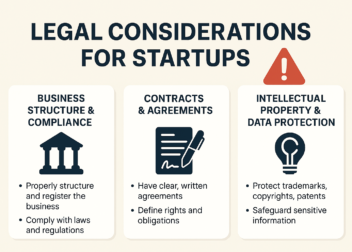
The Legal Foundations Every Startup Must Prioritize

Entrepreneurs often focus on innovation, market strategy, and securing investment when launching a startup. However, overlooking legal structuring can create significant vulnerabilities, which may only become apparent during disputes, due diligence, or intellectual property violations. At Ahlawat Law PC, we understand that legal considerations may seem like an additional expense, but they function as a critical safeguard—similar to insurance. Without proper legal structuring and documentation, startups expose themselves to risks that can threaten their long-term viability. Below, we outline three fundamental legal areas that every startup should prioritize. 1. Business Structure and Regulatory Compliance Selecting the appropriate business structure is essential, as it affects liability, taxation, and access to funding. Entrepreneurs must carefully evaluate whether a sole proprietorship, partnership, or corporation best aligns with their business goals. 📌 Key Considerations: 2. Contracts and Legal Agreements Clear, well-drafted contracts serve as the foundation of any business relationship. Many startups rely on verbal agreements, which can lead to misunderstandings, disputes, or financial loss. Legal documentation is essential to define expectations, allocate risk, and provide remedies in case of non-compliance. 📌 Essential Agreements for Startups: 3. Intellectual Property Protection and Data Privacy Compliance A startup’s intellectual property and data assets are often its most valuable resources. Without adequate legal protections, businesses risk losing control over their brand, innovations, and proprietary technology. 📌 Best Practices for IP and Data Protection: Legal Costs: A Strategic Investment, Not an Expense Startups frequently view legal fees as a cost center rather than a business safeguard. However, failing to address legal risks early can result in costly litigation, lost investment opportunities, and regulatory penalties. Investing in legal protections from the outset ensures operational stability and long-term success. Conclusion A startup’s legal foundation is just as critical as its business model. Entrepreneurs who take a proactive approach to structuring, contracts, and intellectual property protection will be better positioned to scale their businesses while mitigating risks. At Ahlawat Law PC, we assist startups in navigating legal complexities with tailored legal strategies. For guidance on structuring your business or drafting essential agreements, please contact us today. Disclaimer: This article is for informational purposes only and does not constitute legal advice. For personalized legal counsel, consult a qualified lawyer. #OntarioLaw #StartupLegalProtection #BusinessLaw #CorporateLaw #IntellectualProperty #PrivacyLaw #LegalCompliance